

Key Takeaways:
- CFTC Chairman Michael Selig confirmed the agency is deploying AI and automation tools to surveil markets with a 20%-reduced staff since FY2024.
- Six Polymarket accounts reportedly earned $1.2 million betting on U.S. Iran strikes hours before the February 28th action, raising insider trading alarms.
- Selig called bipartisan crypto market structure legislation under the Clarity Act essential, urging Congress to send the bill to the president’s desk in 2025.
Selig Calls Clarity Act Essential as CFTC Faces Congressional Heat Over Polymarket Insider Trading Fears
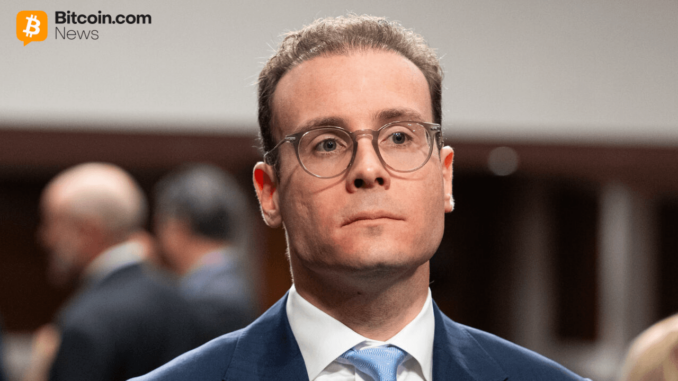
Chairman Michael Selig, sworn in roughly 100 days before the hearing, testified that the Commodity Futures Trading Commission (CFTC) has authorized the use of Microsoft 365 Copilot across its workforce and is building new AI-driven surveillance systems to flag fraud, market manipulation, and insider trading. The agency’s headcount has dropped from 708 full-time employees at the end of fiscal year 2024 to approximately 543, a reduction of more than 20%. Selig defended the cuts, telling the panel the agency is running more efficiently than ever.
Ranking Member Angie Craig of Minnesota pushed back directly. Craig argued the CFTC cannot adequately oversee digital commodity trading and prediction markets with staffing levels below what the first Trump administration had itself requested. She called for the agency to be fully funded and said Congress never intended for a single commissioner to run the CFTC alone. Selig is currently the only sitting commissioner, with four seats vacant.
Multiple members questioned Selig about a pattern of well-timed trades on Polymarket, Kalshi, and other platforms tied to sensitive government actions. Rep. Jim McGovern of Massachusetts cited roughly $500 million in oil and equities futures placed just before President Trump posted on Truth Social at 7:04 a.m. on March 23rd that the U.S. had begun ceasefire talks with Iran. Rep. April McClain Delaney and others referenced a Reuters report that six newly created Polymarket accounts earned approximately $1.2 million betting that U.S. airstrikes on Iran would occur, with those accounts funded within 24 hours of the strikes.
Selig repeated a zero tolerance policy on insider trading throughout the hearing but declined to confirm or deny whether the CFTC is investigating any specific trades, saying doing so could compromise active investigations. He said the agency’s enforcement division, led by David Miller, a former CIA officer and Southern District of New York prosecutor, is actively staffing up.
On digital assets, Selig expressed strong support for the CLARITY Act, bipartisan crypto market structure legislation this committee has advanced. He told members the bill is essential to end years of regulatory ambiguity that has pushed builders and innovators offshore. He said the CFTC and U.S. Securities and Exchange Commission (SEC) have already signed a joint interpretation clarifying which crypto assets qualify as securities and which as commodities. The agencies also entered a memorandum of understanding to coordinate surveillance, information sharing, and rulemaking.
Selig addressed prediction markets at length. The agency issued an advance notice of proposed rulemaking in March 2025 soliciting public comment on how to regulate event contracts, which are derivatives traded on registered exchanges. He told the committee the CFTC has not allowed contracts tied to war, terrorism, or assassination on its regulated platforms, but declined to prejudge the outcome of the rulemaking process. Several Democrats, including Rep. Jim Costa of California and Rep. Teresa Leger Fernandez of New Mexico, argued that prediction market sports contracts directly undermine tribal gaming compacts and state sovereignty.
Rep. Austin Scott of Georgia raised concerns about decentralized exchange ( DEX) platforms such as Hyperliquid, which lists perpetual contracts on crude oil without segregated funds, market surveillance, or U.S. oversight. Scott said volumes on those platforms may reach 200,000 orders per second and could be affecting domestic gasoline prices. Selig said the CFTC is monitoring those offshore markets and wants to bring that activity back under domestic regulation.
Selig told the committee the agency has also taken steps to clarify the capital treatment of payment stablecoins, issued guidance on tokenized collateral, and outlined obligations for U.S.-based software developers building on blockchain infrastructure. He called legislation the only way to lock in those protections long-term against future administrative reversals.
The hearing also covered rising fertilizer prices, concerns about 24-hour trading models for agricultural commodity contracts, the CFTC whistleblower fund’s funding stability, and a push by multiple members to codify existing no-action letters that protect church pension plans and university endowments from commodity pool operator registration requirements.
Committee Chairman GT Thompson of Pennsylvania closed by saying he and Craig will send a letter to the White House urging the prompt nomination of qualified individuals to fill all four vacant commissioner seats on a bipartisan basis. The hearing record will remain open for 10 days.






Kommentar hinterlassen