
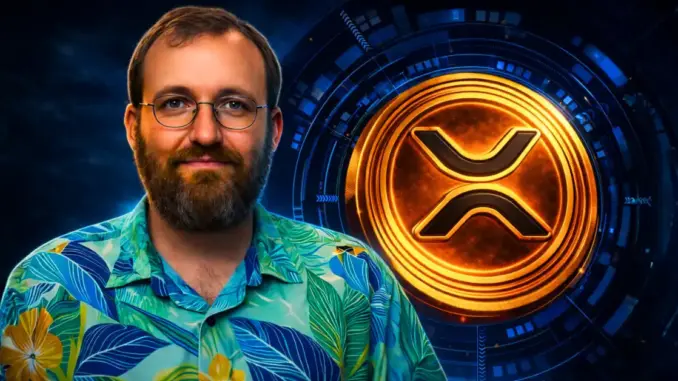

Charles Hoskinson has delivered one of his most pointed critiques of Ripple and XRP’s tokenomic structure, arguing that nothing in Ripple’s business model creates organic buy demand for the XRP token and that holders are essentially funding a private company with no obligation to return value to them.
“There is nothing in the Ripple network that creates buy demand for the XRP token,” Hoskinson said during a recent discussion. “Nothing.”
The Argument
Hoskinson’s critique centres on a fundamental structural distinction between tokens that create circular economies and tokens that primarily serve as fundraising instruments for the companies behind them.
His comparison point is Hyperliquid. When users interact with the Hyperliquid ecosystem, activity generates fees that are used to buy back the underlying token. Network usage directly creates token demand. Value flows to holders as the network grows.
XRP, he argues, works differently. Ripple is a private company with independent investors and shareholders. When Ripple generates revenue, it does not buy back XRP. It sells XRP, converts the proceeds to cash and uses that cash to acquire assets for the company. The prime broker, the custody platform, the treasury management tools — all of that value sits on Ripple’s balance sheet, not in the hands of XRP holders.
“When they do make revenue and profit, there are no buybacks,” he said. “The Ripple company is not going and buying back XRP. They sell the XRP.”
The Regulatory Game Behind It All
Hoskinson extended his critique beyond tokenomics into regulatory strategy, arguing that Ripple’s aggressive push to classify all new crypto projects as securities by default is designed to cement incumbent advantages permanently.
Bitcoin, Ethereum, XRP and Cardano are all grandfathered in as commodities under existing frameworks. Every new project that launches faces security classification by default, which means it cannot get listed, cannot access liquidity and cannot broaden its ownership base enough to ever qualify as a mature blockchain commodity.
“The incumbents basically get a monopoly, an oligarchy, and they’re grandfathered in,” Hoskinson said. “The new projects never get anything. That feels like Wall Street.”
The argument is that regulatory clarity, as currently being pushed by established players, is not a rising tide that lifts all boats. It is a drawbridge being pulled up behind the projects that are already across.
Trust with CoinPedia:
CoinPedia has been delivering accurate and timely cryptocurrency and blockchain updates since 2017. All content is created by our expert panel of analysts and journalists, following strict Editorial Guidelines based on E-E-A-T (Experience, Expertise, Authoritativeness, Trustworthiness). Every article is fact-checked against reputable sources to ensure accuracy, transparency, and reliability. Our review policy guarantees unbiased evaluations when recommending exchanges, platforms, or tools. We strive to provide timely updates about everything crypto & blockchain, right from startups to industry majors.
Investment Disclaimer:
All opinions and insights shared represent the author’s own views on current market conditions. Please do your own research before making investment decisions. Neither the writer nor the publication assumes responsibility for your financial choices.
Sponsored and Advertisements:
Sponsored content and affiliate links may appear on our site. Advertisements are marked clearly, and our editorial content remains entirely independent from our ad partners.






Kommentar hinterlassen